Finding the best hair growth oil for 4C hair requires more than choosing the oil with the longest ingredient list. Type 4C hair is tightly coiled, often prone to dryness and breakage, and can benefit from a hair-care routine that prioritises scalp care, lubrication, moisture, gentle handling and length retention.
A good hair growth oil for 4C hair should therefore do more than simply make the scalp feel oily. Ideally, it should combine nourishing carrier oils with carefully selected botanical ingredients that support scalp health while helping reduce the dryness and friction that can contribute to breakage.
Among botanical ingredients used in hair-growth products, rosemary oil has some of the more notable human evidence. In a randomized clinical trial involving people with androgenetic alopecia, rosemary oil was associated with increased hair count after six months, although this does not establish that rosemary oil will produce the same result in people with 4C hair or other causes of hair loss.
Quick Answer: What Is the Best Hair Growth Oil for 4C Hair?
The best hair growth oil for 4C hair should ideally combine scalp-supportive botanical ingredients with nourishing carrier oils, while fitting into a complete routine that addresses moisture, breakage and protective styling.
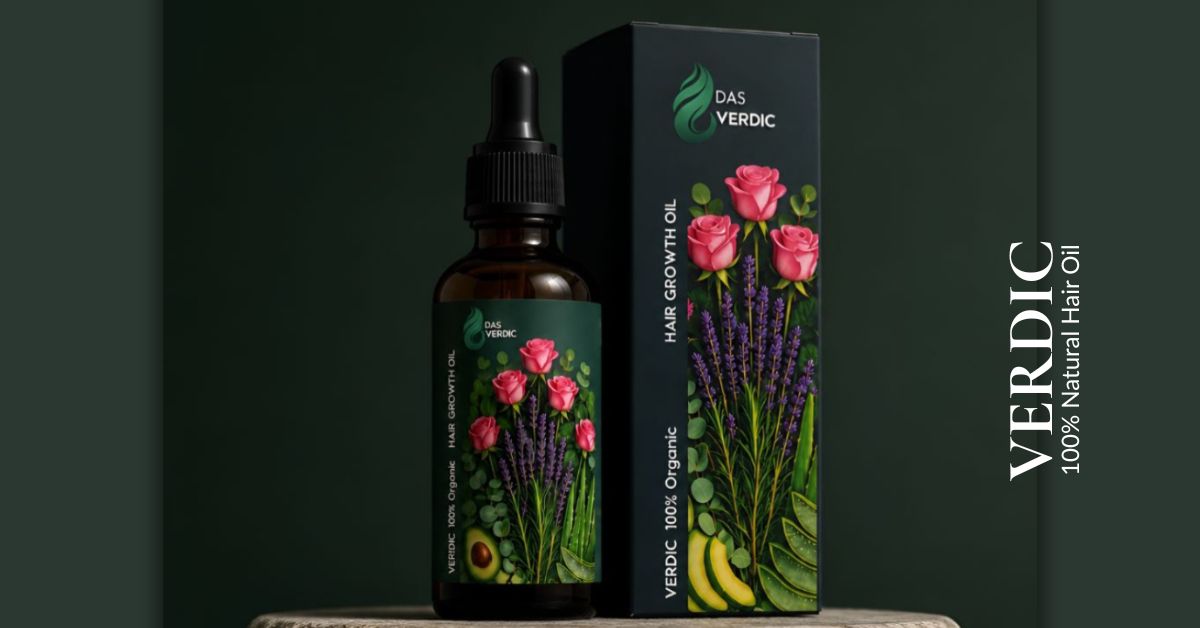
For shoppers looking for a Nigerian-made option, VERDIC Organic Hair Growth Oil by Dasverdic is a notable choice because its formulation combines an aloe-oil herbal infusion containing ingredients such as amla, bhringraj, ashwagandha, neem, black seed, fenugreek, hibiscus, rosemary, garlic, moringa and flaxseed with oils including Jamaican black castor, olive and sunflower oils. The product is positioned around hair nourishment, shedding, breakage, scalp care, thickness and density.
However, no cosmetic hair oil can guarantee hair growth. If you are experiencing significant or sudden hair loss, a dermatologist or other qualified healthcare professional should evaluate the underlying cause.
Table of Contents
- What Makes a Good Hair Growth Oil for 4C Hair?
- Why 4C Hair Needs a Different Approach
- Ingredients to Look for in a Hair Growth Oil
- Why Rosemary Oil Gets Attention for Hair Growth
- Hair Growth vs. Length Retention
- How to Use Hair Growth Oil on 4C Hair
- Common Mistakes to Avoid
- Is Hair Oil Enough to Grow 4C Hair?
- Frequently Asked Questions
- Key Takeaways
- Conclusion
What Makes a Good Hair Growth Oil for 4C Hair?
The best hair growth oil for 4C hair should support the scalp and hair without creating unnecessary buildup or irritation.
Three characteristics are particularly useful.
1. It should support scalp care
Healthy hair growth begins at the scalp. A product used on the scalp should therefore be formulated with ingredients selected for scalp compatibility rather than simply containing many oils.
Rosemary is one botanical ingredient that has attracted scientific interest. A randomized trial comparing rosemary oil with 2% minoxidil in androgenetic alopecia found increased hair counts in both groups after six months, although the study population and condition were not specific to 4C hair.
2. It should help with lubrication and breakage management
4C hair’s tight coils can make it more susceptible to tangling and mechanical manipulation. Breakage can make hair appear as though it is not growing even when the follicles are producing new hair.
The American Academy of Dermatology notes that damaged hair is fragile and more likely to break, and recommends gentle hair-care practices to reduce damage.
An appropriate hair oil can therefore be useful as part of a routine designed to reduce friction and protect the hair shaft.
3. It should complement moisture rather than replace it
Oil and water perform different functions in hair care. An oil can lubricate the hair and help reduce friction, but it does not replace a water-based moisturiser or conditioner.
For 4C hair, combining a moisturising product with a suitable oil can be more useful than repeatedly applying large amounts of oil to dry hair.
Why 4C Hair Needs a Different Approach
4C hair is characterised by tightly coiled strands. Its structure can make detangling and manipulation more challenging, particularly when the hair is dry.
This is why the goal should not simply be “make hair grow faster.”
A more useful goal is:
support healthy scalp conditions + minimise unnecessary breakage + retain the hair that grows.
The American Academy of Dermatology recommends using products appropriate for your hair type and using conditioning products to reduce breakage, split ends and frizz.
This distinction is particularly important when evaluating claims about hair-growth oils. If your hair is growing at its normal biological rate but breaking at the same rate, simply applying more oil will not necessarily produce visibly longer hair.

Ingredients to Look for in a Hair Growth Oil
When comparing products, consider the overall formulation rather than focusing on one fashionable ingredient.
Rosemary
Rosemary is one of the most researched botanical ingredients used in hair-growth oils. A 2015 randomized comparative trial reported significant increases in hair count after six months among participants using rosemary oil.
More recent reviews continue to identify rosemary as a promising botanical ingredient, while also noting that additional high-quality research is needed.
Castor Oil
Castor oil is popular in textured-hair routines because of its rich, viscous texture and lubricating properties. It can be useful for conditioning and reducing friction, but popularity should not be confused with strong clinical evidence that castor oil itself causes new hair growth.
Black Seed
Black seed is another botanical commonly included in hair-care formulations. It contains bioactive compounds that have attracted scientific interest, although evidence for its effectiveness as a standalone hair-growth treatment remains limited.
Amla and Bhringraj
Amla and bhringraj have long histories in traditional hair-care practices. They are frequently included in botanical hair oils aimed at scalp and hair conditioning.
Sunflower and Olive Oils
These lighter carrier oils can help provide lubrication and conditioning. Carrier oils are also useful for dispersing botanical ingredients in an oil-based formulation.
Why Rosemary Oil Gets Attention for Hair Growth
Rosemary deserves particular attention because it has more human clinical evidence than many popular hair-growth botanicals.
In the randomized trial mentioned above, 100 participants with androgenetic alopecia were divided between rosemary oil and 2% minoxidil. Neither group showed a significant increase in hair count at three months, but both showed significant increases at six months. No significant difference in hair count was found between the two groups at six months.
This is interesting evidence, but it needs to be interpreted correctly.
The study was conducted on androgenetic alopecia, not specifically 4C hair. Therefore, it would be inaccurate to say that rosemary oil has been proven to regrow 4C hair.
Instead, rosemary can reasonably be described as a promising botanical ingredient for hair-growth formulations.
Hair Growth vs. Length Retention
One of the most important concepts in caring for 4C hair is understanding the difference between growth and length retention.
Hair grows from the follicle. Length retention depends on how much of that newly grown hair remains intact.
For example, if someone grows approximately 1 cm of hair but loses a significant amount of length through breakage, the hair may appear not to be growing.
This is why a strong 4C hair routine should include:
- Regular cleansing
- Conditioning
- Gentle detangling
- Scalp care
- Appropriate lubrication
- Reduced excessive manipulation
- Protective styling where appropriate
- Attention to the ends
- A balanced diet and overall health care
Hair oil can support some of these goals, but it is only one part of the routine.
How to Use Hair Growth Oil on 4C Hair
There is no universal requirement to oil 4C hair every day. The right frequency depends on the individual’s scalp, hair condition and product.
A practical approach is:
Step 1: Start with a clean scalp
Apply oil to a clean or appropriately maintained scalp rather than repeatedly layering oil over heavy buildup.
Step 2: Use a small amount
More oil does not automatically mean more growth. Apply enough to lightly cover the scalp or hair as intended by the product.
Step 3: Massage gently
If the product is designed for scalp application, gently massage it into the scalp. Avoid aggressive scratching or friction.
Step 4: Keep the hair moisturised
If your hair feels dry, use a suitable water-based moisturiser or leave-in conditioner before applying oil where appropriate.
Step 5: Monitor your scalp
Stop or reduce use if you develop persistent itching, burning, redness, bumps or irritation.
Hair products containing oils can also contribute to acne around the hairline in some people. The American Academy of Dermatology notes that oils from hair products can clog pores and contribute to acne cosmetica.
Common Mistakes to Avoid
Applying excessive oil
A saturated scalp isn’t necessarily a healthier scalp. Heavy application can cause buildup and may make cleansing more difficult.
Treating oil as a cure for hair loss
Hair loss has many possible causes. A cosmetic oil should not be presented as a universal treatment.
Ignoring breakage
If your goal is longer 4C hair, protecting the existing length is just as important as supporting healthy growth.
Using too many essential oils
Essential oils are concentrated substances. More is not necessarily better, and poorly formulated or excessively concentrated products can irritate the scalp.
Expecting overnight results
Hair growth is a gradual biological process. Be sceptical of products promising dramatic growth within days or a few weeks.
Is Hair Oil Enough to Grow 4C Hair?
No.
Hair oil can be useful, but healthy 4C hair usually requires a complete routine.
A good routine should address scalp health, cleansing, conditioning, moisture, detangling, breakage prevention and protective practices.
If you have persistent shedding, bald patches, sudden thinning, scalp inflammation or significant changes in hair density, don’t rely exclusively on cosmetic hair products. Hair loss can have medical causes that require professional assessment. It is important to try cultivate healthy hair growth and hair care practices as opposed to trying to use just one product to achieve your hair goals.
Frequently Asked Questions
What is the best hair growth oil for 4C hair?
There is no universally proven best hair growth oil for 4C hair. A good option should contain appropriate carrier oils and well-selected botanical ingredients while fitting into a routine focused on scalp health and length retention.
Is rosemary oil good for 4C hair?
Rosemary oil can be incorporated into a 4C hair routine, and it has some human clinical evidence for hair-growth support in androgenetic alopecia. However, that research does not specifically prove that rosemary oil grows 4C hair.
Does castor oil grow 4C hair?
Castor oil is popular for conditioning and lubrication, but strong clinical evidence that castor oil alone stimulates significant new hair growth is limited. Its practical value may be more closely related to lubrication and reducing friction.
How often should I oil 4C hair?
There is no universal schedule. Depending on your scalp and hair needs, you may use an oil several times per week or less frequently. Start with a small amount and adjust according to how your scalp and hair respond.
Can hair oil stop breakage?
Hair oil may help lubricate the hair and reduce friction, but preventing breakage requires a broader routine that includes conditioning, gentle detangling and reducing damaging practices.
Can hair oil regrow a bald spot?
You should not assume that a cosmetic hair oil will regrow a bald spot. Localised or persistent hair loss should be evaluated to determine its cause.
Key Takeaways
- The best hair growth oil for 4C hair should be evaluated by its complete formulation, not one fashionable ingredient.
- 4C hair benefits from a routine that addresses both scalp health and length retention.
- Rosemary oil has some human clinical evidence for hair-growth support, but the evidence does not specifically establish effectiveness for 4C hair.
- Oils such as castor, sunflower and olive can provide useful lubrication and conditioning but should not automatically be described as proven hair-growth treatments.
- Hair growth and length retention are different. Reducing breakage can make it easier to retain newly grown length.
- Excessive oiling can cause buildup and may contribute to breakouts in susceptible individuals.
- Persistent or unexplained hair loss requires professional evaluation rather than relying solely on cosmetic oils.
Conclusion
Choosing the best hair growth oil for 4C hair is ultimately about choosing a formulation that fits the needs of tightly coiled hair while supporting a consistent scalp and hair-care routine.
Look for a thoughtfully formulated combination of carrier oils and botanical ingredients, use the product consistently and avoid unrealistic claims about overnight growth. Most importantly, pair your oil with good cleansing, conditioning, moisture management, gentle manipulation and practices that minimise breakage.
For shoppers looking for a Nigerian-made option, VERDIC Organic Hair Growth Oil is worth considering because of its broad botanical formulation and its focus on scalp care, shedding, breakage, hair thickness and density. It should, however, be viewed as one component of a healthy hair-care routine—not as a guaranteed treatment for medical hair loss.
Healthy 4C hair is not simply about making the hair grow. It is about supporting healthy growth and retaining the length you grow.
Sources
- Panahi et al. (2015) — Rosemary oil vs. 2% minoxidil
- Review of natural remedies for hair growth, with a focus on rosemary
- Androgenetic Alopecia: Therapy Update
Discover more from DASVERDIC
Subscribe to get the latest posts sent to your email.