Table of Contents
- What Is Nut Free Soap?
- Why Choose Nut Free Soap?
- Which Ingredients Should You Avoid in Nut Free Soap?
- Almond Oil
- Peanut Oil
- Macadamia Oil
- Walnut Oil
- Hazelnut Oil
- Other Nut-Derived Ingredients
- Is Shea Butter a Nut?
- Is Coconut Oil a Nut?
- Is Nut-Free Soap the Same as Hypoallergenic Soap?
- What Makes a Good Nut-Free Soap for Sensitive Skin?
- A Clearly Listed Ingredient List
- No Known Nut-Derived Ingredients
- A Simple Formulation
- Appropriate Fragrance Choices
- A Manufacturer You Can Contact
- How Do You Know If Soap Is Nut-Free?
- Can Handmade Soap Be Nut-Free?
- Nut-Free Soap vs Regular Soap
- What Are the Benefits of Nut-Free Soap?
- Frequently Asked Questions About Nut Free Soap
- Is nut-free soap safe for people with nut allergies?
- Does nut-free soap contain almond oil?
- Can nut-free soap be used on sensitive skin?
- Is natural soap automatically nut-free?
- Where can I buy nut-free soap?
- Final Thoughts: Choosing the Right Nut-Free Soap
What Is Nut-Free Soap? – Things to Consider before you buy!
If you have a nut allergy, sensitive skin, or simply prefer personal care products made without nut-derived ingredients and you want to buy nut free soap, choosing the right nut free soap can require more attention than reading the front of the package. Some soaps contain oils, butters, extracts, or other ingredients derived from peanuts or tree nuts, and these may not always be obvious from the product name.
So, what is nut-free soap?
Nut-free soap is soap formulated without peanut, tree-nut, or other nut-derived ingredients. Depending on the manufacturer’s definition, this may include avoiding ingredients such as almond oil, peanut oil, macadamia oil, walnut oil, hazelnut oil, cashew-derived ingredients, and other nut-based materials.
For people with known allergies, understanding the ingredients in a soap is particularly important. Cosmetics and personal care products can cause allergic reactions or contact dermatitis, and the FDA recommends carefully checking ingredient lists and contacting manufacturers when you have questions about specific ingredients.
This complete guide explains what nut-free soap means, which ingredients to look for, who may benefit from it, and how to choose a suitable nut-free soap for sensitive skin.
What Is Nut Free Soap?
Nut free soap is a cleansing product made without ingredients derived from nuts.
Traditional handmade soaps are commonly produced by combining fats or oils with an alkali through a process called saponification. The fats and oils react with the alkali to form soap. When properly made, the finished soap does not contain the original oils in their original form.
However, the source of the oils used to make soap can still matter when choosing a product for someone with a nut allergy.
Common nut-derived ingredients that may appear in personal care products include:
- – Sweet almond oil
- – Bitter almond oil
- – Peanut oil
- – Macadamia oil
- – Walnut oil
- – Hazelnut oil
- – Pistachio-derived ingredients
- – Cashew-derived ingredients
- – Brazil nut-derived ingredients
Some ingredients may also have botanical or scientific names that make their source less obvious to consumers.
Therefore, a soap should not automatically be considered nut-free simply because the word “nut” does not appear prominently on the packaging.
Why Choose Nut Free Soap?
The most important reason to choose a nut-free soap is to reduce exposure to an ingredient you know or suspect you are allergic to.
Cosmetic products, including soaps, can cause allergic reactions and contact dermatitis. Symptoms may include itching, redness, irritation, swelling, or a rash.
A nut-free soap can also be attractive to people who:
- – Have a diagnosed peanut or tree-nut allergy
- – Have very sensitive skin
- – Prefer simpler ingredient lists
- – Want to avoid nut-derived cosmetic ingredients
- – Are purchasing soap for someone with a known allergy
- – Want greater transparency about the ingredients used in their skincare
-
- However, nut-free does not automatically mean hypoallergenic. A soap can be free from nuts and still contain fragrances, essential oils, preservatives, botanicals, or other ingredients that may irritate or sensitize certain individuals.
Which Ingredients Should You Avoid in Nut Free Soap?
When looking to buy nut-free soap for sensitive skin, pay close attention to the complete ingredient list.
Some ingredients commonly associated with nuts include:
Almond Oil
Almond oil may be listed as Prunus Amygdalus Dulcis (Sweet Almond) Oil or a similar INCI designation.
Peanut Oil
Peanut-derived oil may appear as Arachis Hypogaea (Peanut) Oil.
Macadamia Oil
Macadamia oil may appear as Macadamia Integrifolia Seed Oil or a related botanical name.
Walnut Oil
Walnut oil can be listed as Juglans Regia Seed Oil or another walnut-derived INCI name.
Hazelnut Oil
Hazelnut-derived oil may appear under a botanical name such as Corylus Avellana Seed Oil.
Other Nut-Derived Ingredients
Depending on the product, nut-derived ingredients can include extracts, butters, proteins, fragrances, or other derivatives.
Because ingredient names can be confusing, consumers with serious allergies should not rely solely on guessing from an ingredient name. Contacting the manufacturer is often the safest way to confirm whether a product is suitable for a specific allergy.
Is Shea Butter a Nut?
This is one of the most common questions when discussing nut free soap.
Shea butter comes from the shea tree (Vitellaria paradoxa), and it is commonly called a shea nut butter because of the fruit and seed from which it is obtained.
However, whether someone with a particular tree-nut allergy needs to avoid shea butter is a medical and individual question. Allergy organizations note that ingredients such as shea, argan, and coconut are commonly used in skincare and haircare, and people with allergies should discuss their individual risks with an allergy professional.
For this reason, a manufacturer should clearly define what it means when it describes a product as nut-free.
If a product is specifically intended for people avoiding all tree-derived or nut-associated ingredients, its formulation policy should be clearly communicated.
Is Coconut Oil a Nut?
Another common source of confusion is coconut oil.
Despite the word “coconut” sometimes being associated with nuts in everyday language, coconut is botanically a drupe rather than a tree nut. Some people can nevertheless be allergic to coconut. Coconut was once declared a tree nut by the FDA so there is a high chance that people with nut allergies may well react to it as well.
Therefore, someone with a specific nut allergy should not automatically assume that a product containing coconut oil is either safe or unsafe for them.
If you have a diagnosed allergy, follow the advice of your allergist or healthcare professional rather than relying on general internet definitions.
Is Nut Free Soap the Same as Hypoallergenic Soap?
No.
The terms nut-free and hypoallergenic describe different concepts.
Nut-free soap specifically refers to the absence of specified nut-derived ingredients.
Hypoallergenic is a broader marketing term that generally suggests a product is less likely to cause an allergic reaction. However, terminology such as “hypoallergenic” does not guarantee that a product will not cause an allergic reaction. The FDA specifically advises consumers not to rely solely on terms such as “hypoallergenic,” “fragrance-free,” or “for sensitive skin” when evaluating potential allergens.
A nut free soap may therefore still contain ingredients that do not work well for your skin.
What Makes a Good Nut Free Soap for Sensitive Skin?
If you have sensitive skin, choosing a gentle nut-free soap involves more than avoiding nut oils.
Look for a product with:
1. A Clearly Listed Ingredient List
A transparent ingredient list makes it easier to identify ingredients you need to avoid.
2. No Known Nut-Derived Ingredients
Check for almond, peanut, macadamia, walnut, hazelnut, cashew, pistachio, and other ingredients relevant to your allergy.
3. A Simple Formulation
A shorter, thoughtfully selected ingredient list may make it easier to identify potential irritants.
4. Appropriate Fragrance Choices
Fragrances and some fragrance components can cause allergic reactions or irritation.
If your skin is particularly reactive, you may prefer an unscented or fragrance-free soap.
5. A Manufacturer You Can Contact
A reputable manufacturer should be able to answer questions about ingredients and manufacturing practices.
How Do You Know If Soap Is Nut-Free?
The best approach is to check the complete ingredient list and verify the manufacturer’s formulation policy.
Do not rely only on statements such as:
- – “Natural soap”
- – “Organic soap”
- – “Handmade soap”
- – “Gentle soap”
- – “Sensitive skin soap”
None of these descriptions automatically means that the product is nut-free.
In fact, natural and handmade soaps can contain many plant oils and butters, including nut-derived ingredients.
A good nut free soap brand should be transparent about its ingredients and should clearly explain its nut-free policy.
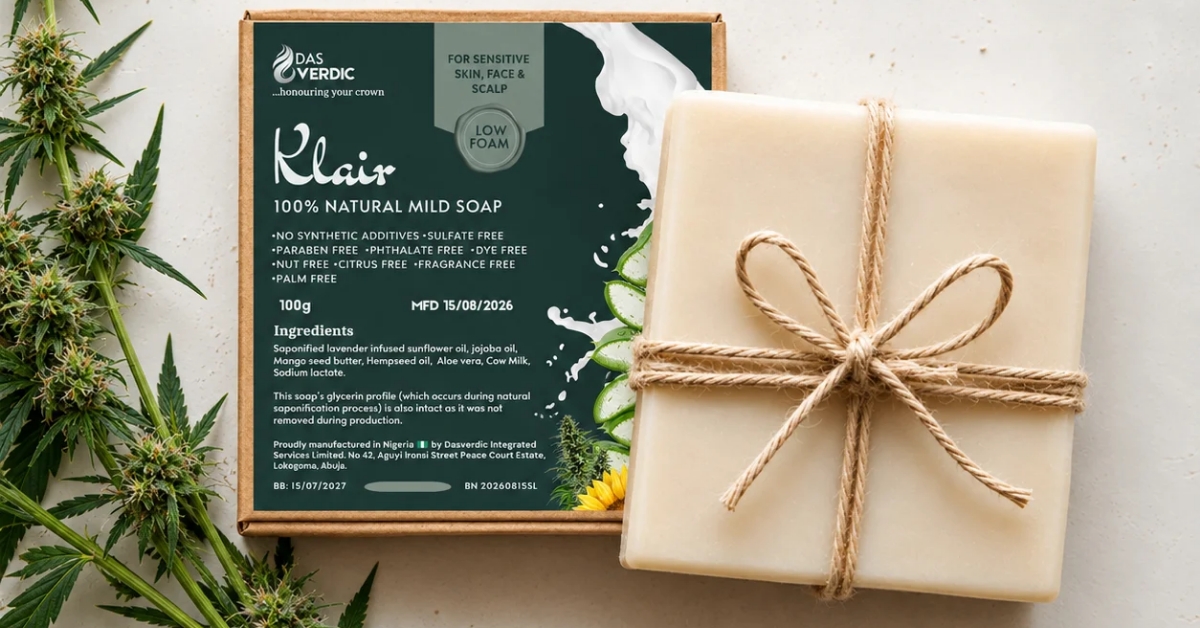
Luckily, Klair by Dasverdic ticks all these boxes and is made for:
- People with nut allergies
- People who react to coconut and coconut derived ingredients
- People who react to shea butter
- People who react to citrus derivatives
- Skin types that are sensitive to fragrance
- People who react to palm derivates
- People who react to olive oil
Can Handmade Soap Be Nut-Free?
Yes.
A handmade soap can be formulated without nut-derived ingredients.
For example, a soapmaker may choose oils and butters from non-nut sources when developing a nut-free handmade soap.
However, the fact that a soap is handmade does not automatically make it nut-free. The formulation and manufacturing practices determine whether it meets that description.
This is particularly important when a soapmaker produces multiple products using different oils and butters in the same workspace.
If you have a severe allergy, ask the manufacturer about both ingredients and potential cross-contact during manufacturing.
Nut Free Soap vs Regular Soap
The primary difference is the formulation criteria.
| FEATURE | NUT-FREE SOAP | REGULAR SOAP |
| Nut-derived ingredients | Specifically excluded | May or may not be included |
| Ingredient transparency | Important | Varies |
| Suitable for nut allergy concerns | Designed with this consideration | Cannot be assumed |
| Sensitive-skin suitability | Depends on formulatioon | Depends on formulation |
| Fragrance | May be fragrance- free or scented | Varies |
| Manufacturing policy | Should be clearly communicated | Varies |
The important point is that nut-free does not necessarily mean better for everyone. It means the formulation has been designed around avoiding specified nut-derived ingredients.
What Are the Benefits of Nut Free Soap?
Potential benefits include:
- – Helps people avoid specific nut-derived ingredients
- – Makes ingredient selection easier for people with nut allergies
- – Can support a simplified skincare routine
- – May be appropriate for people seeking nut-free personal care products
- – Provides greater formulation transparency
- – Can be formulated specifically for sensitive skin like Klair by Dasverdic
- However, people with serious allergies should remember that individual reactions vary, and no cosmetic product should be assumed to be completely risk-free without checking its ingredients and manufacturing information.
Frequently Asked Questions About Nut-Free Soap
Is nut-free soap safe for people with nut allergies?
A genuinely nut-free product can help someone avoid specified nut-derived ingredients, but people with severe allergies should verify the manufacturer’s ingredients and cross-contact practices and follow advice from their healthcare professional.
Does nut-free soap contain almond oil?
A properly formulated nut-free soap should not contain almond oil if almond-derived ingredients are included in the manufacturer’s definition of “nut-free.” Always check the ingredient list.
Can nut-free soap be used on sensitive skin?
Yes. A nut-free soap can be formulated for sensitive skin, but being nut-free does not automatically make a soap gentle. Fragrance, essential oils, preservatives, and other ingredients can still cause irritation.
Is natural soap automatically nut-free?
No. Natural soaps can contain almond oil, shea butter, macadamia oil, walnut oil, or other plant-derived ingredients. Always check the formulation.
Where can I buy nut-free soap?
Look for brands that clearly publish their ingredient lists and explain their nut-free formulation policy. If you are buying nut-free soap in Nigeria, ask the manufacturer or seller specifically whether the product contains peanut or tree-nut-derived ingredients and whether cross-contact is possible.
Final Thoughts: Choosing the Right Nut Free Soap
Choosing a nut free soap is ultimately about understanding exactly what goes into the product.
If you have a nut allergy, don’t rely solely on marketing terms such as “natural,” “organic,” “handmade,” or “hypoallergenic.” Instead, examine the complete ingredient list and ask the manufacturer about ingredients that may be unclear.
For people with sensitive skin, the ideal nut-free soap for sensitive skin should combine a nut-conscious formulation with a gentle cleansing system and carefully selected ingredients.
Most importantly, if you have a serious allergy, treat product selection as a safety issue. Confirm the ingredients directly with the manufacturer and follow your healthcare professional’s recommendations.
A transparent ingredient list and clear manufacturing policy can make choosing a gentle, nut-free soap much easier and more confident.