Table of Contents
- What Is Nut Free Soap?
- Why Buy Nut Free Soap?
- You Want to Avoid Nut-Derived Ingredients
- You Prefer a Simple Ingredient List
- You Have Sensitive Skin
- You Want Plant-Based Alternatives
- How to Choose the Best Nut Free Soap
- Check the Complete Ingredient List
- Look for Clearly Identified Plant Oils
- Understand the Difference Between Nuts and Seeds
- What Ingredients Can Be Used in Nut Free Soap?
- Sunflower Oil
- Hempseed Oil
- Aloe Vera
- Mango Butter
- Is Shea Butter a Nut?
- What About Jojoba Oil?
- Nut Free Soap vs. Hypoallergenic Soap
- Nut Free Soap for Sensitive Skin
- Buy Nut Free Soap in Nigeria
- Why Consider Handmade Nut Free Soap?
- Dasverdic Klair Nut Free Soap
- Is Klair Suitable for Sensitive Skin?
- What Makes a Good Nut Free Soap?
- Transparent Ingredients
- Thoughtful Formulation
- Appropriate Manufacturing
- Clear Product Information
- Honest Claims
- Nut Free Soap Ingredients to Look For
- Ingredients to Check Carefully When Buying Nut Free Soap
- How to Store Handmade Nut Free Soap
- Frequently Asked Questions About Nut Free Soap
- What is the best nut free soap?
- Where can I buy nut free soap in Nigeria?
- Is shea butter considered nut free?
- Is mango butter a nut?
- Is jojoba oil nut free?
- Is natural soap automatically nut free?
- Is nut free soap suitable for sensitive skin?
- Can children use nut free soap?
- Final Thoughts: Should You Buy Nut Free Soap?
If you are looking to buy nut free soap, choosing the right product involves more than simply checking whether the word “nut” appears on the front of the package. Many soaps contain plant oils, botanical butters, fragrances, or other ingredients that may be important to consider if you are deliberately avoiding nut-derived ingredients.
For people with sensitive skin, ingredient-conscious shoppers, parents looking for gentle cleansing products, and consumers who simply prefer carefully selected plant-based ingredients, finding a suitable nut free soap in Nigeria can sometimes be difficult.
This guide explains what to look for when buying nut-free soap, which ingredients deserve attention, how to read a soap ingredient list, and why a thoughtfully formulated handmade soap may be a better choice for an ingredient-conscious skincare routine.
If you are searching for a natural nut free soap, a mild soap for sensitive skin, or a nut free handmade soap in Nigeria, this guide will help you make a more informed choice.
Nut free soap generally refers to soap formulated without ingredients derived from tree nuts or other nuts that a manufacturer has specifically chosen to exclude.
However, the phrase “nut free” can mean different things depending on the manufacturer. Some products may contain no obvious nuts but still use ingredients derived from plants that consumers may want to investigate more closely.
For this reason, it is important to look beyond marketing claims and examine the complete ingredient list.
A good nut-free soap should clearly identify its ingredients so consumers can understand what they are putting on their skin.
For shoppers with a known food allergy, it is also important to distinguish between:
– A soap formulated without nut-derived ingredients
– A product described as nut-free by its manufacturer
– A product manufactured in an environment that handles nuts
– A product that has been independently tested for allergen contamination
These are not necessarily the same thing.
If you have a severe allergy, always check the manufacturer’s current ingredient information and contact the manufacturer directly before using a product.
Why Buy Nut Free Soap?
There are several reasons someone may choose to buy nut free soap.
1. You want to avoid nut-derived ingredients
Some consumers deliberately avoid ingredients derived from nuts because of allergies, sensitivities, personal preferences, or dietary and lifestyle considerations.
While cosmetic ingredients are not necessarily equivalent to eating the source food, avoiding the source ingredient may still be an important personal requirement.
2. You prefer a simple ingredient list
A short, recognizable ingredient list can make it easier to understand what is in your skincare products.
Rather than choosing a soap based entirely on fragrance or packaging, ingredient-conscious consumers can look for formulations built around clearly identified oils, butters, botanical ingredients, and other functional ingredients.
3. You have sensitive skin
People with sensitive skin often prefer products that are gentle and uncomplicated.
A nut-free formulation can be part of a broader approach to simplifying a skincare routine, although being nut-free does not automatically mean that a soap is suitable for every sensitive skin type.
Other factors matter, including fragrance, essential oils, cleansing strength, individual allergies, and how frequently the product is used.
4. You want plant-based alternatives
Many handmade soaps are formulated around botanical oils and butters.
When selecting one, consumers can look for formulations that use alternatives to common nut-derived ingredients while still providing the cleansing and conditioning characteristics they want.
How to Choose the Best Nut Free Soap
Not every soap marketed as natural, organic, handmade, or sensitive-skin friendly is necessarily nut-free.
If you want to buy nut free soap, consider the following factors.
Check the Complete Ingredient List
The ingredient list is one of the most important things to examine.
Do not rely solely on statements such as:
– Natural soap
– Herbal soap
– Organic soap
– Handmade soap
– Sensitive skin soap
– Plant-based soap
None of these terms automatically means nut-free.
Look at the actual ingredients and identify the oils, butters, fragrances, extracts, and other components used in the formulation.
Look for Clearly Identified Plant Oils
Nut-free soap can be formulated with a variety of non-nut plant oils and ingredients.
Examples can include:
– Sunflower oil
– Hempseed oil
– Aloe vera
– Certain seed oils
– Certain fruit-derived ingredients
– Other carefully selected botanical ingredients
However, the exact suitability of an ingredient depends on your individual requirements.
Understand the Difference Between Nuts and Seeds
This is particularly important when shopping for botanical skincare.
Some cosmetic ingredients come from seeds rather than nuts. For example, sunflower seed oil and hempseed oil are derived from seeds.
Jojoba oil is also derived from the seed of the jojoba plant.
Consumers with allergies should not assume that botanical classification alone determines whether an ingredient is appropriate for them. Allergy considerations can be complex, so anyone with a diagnosed allergy should follow advice from their healthcare professional and verify the manufacturer’s allergen information.
What Ingredients Can Be Used in Nut Free Soap?
A well-formulated nut-free soap does not have to sacrifice skin feel or cleansing performance.
There are many ingredients that can be considered when developing a soap without nut-derived oils or butters.
Sunflower Oil
Sunflower oil is derived from sunflower seeds and is commonly used in skincare formulations.
In soapmaking, oils contribute to the final characteristics of the bar, including cleansing, lather, hardness, and skin feel.
Hempseed Oil
Hempseed oil is obtained from hemp seeds.
It is valued in cosmetic formulations for its fatty acid profile and is often included in ingredient-conscious skincare products.
Aloe Vera
Aloe vera is widely used in skincare formulations and is associated with soothing and moisturizing skincare routines.
In handmade soap, aloe vera can be incorporated as part of a broader formulation designed to provide a pleasant cleansing experience.
Mango Butter
Mango butter is derived from the seed kernel of the mango fruit.
This is an important example of why consumers should not assume that every ingredient containing the word “butter” is a tree nut butter.
Mango butter is botanically different from traditional tree nut ingredients, although individual allergy considerations still matter.
Is Shea Butter a Nut?
This is one of the most common questions people ask when researching nut free soap.
Shea butter comes from the shea tree and is technically derived from a nut or seed-like kernel. For that reason, people specifically avoiding tree-nut-derived ingredients may choose to avoid shea butter depending on their personal requirements and medical advice.
This illustrates why simply searching for the word “nut” on a product label may not be enough.
If you are specifically looking for soap without shea butter, nut-free soap, or soap formulated for a particular allergy concern, read the entire ingredient list and confirm the manufacturer’s definition of “nut-free.”
What About Jojoba Oil?
Jojoba oil is another ingredient that sometimes causes confusion.
Despite its name, jojoba oil is actually a liquid wax obtained from the seeds of the jojoba plant.
Therefore, it is not a conventional tree nut oil.
However, people with serious allergies should still evaluate cosmetic ingredients according to their individual medical guidance rather than relying solely on botanical terminology.
Nut Free Soap vs. Hypoallergenic Soap
The terms nut-free soap and hypoallergenic soap are not interchangeable.
Nut-free describes the exclusion of specified nut-derived ingredients.
Hypoallergenic generally communicates that a product has been formulated with the intention of reducing the likelihood of allergic reactions, but it does not mean that allergic reactions are impossible.
A person can react to an ingredient that has nothing to do with nuts.
For example, fragrance, essential oils, preservatives, botanical extracts, or other ingredients may cause irritation or allergic reactions in susceptible individuals.
Therefore, if you are searching for hypoallergenic soap, look at the entire formulation rather than assuming that nut-free automatically means hypoallergenic.
Nut Free Soap for Sensitive Skin
If you have sensitive skin and want to buy nut free soap, consider more than the absence of nut-derived ingredients.
A suitable soap may also benefit from a thoughtful formulation that avoids unnecessary complexity.
When shopping, consider:
– The cleansing strength of the soap
– Added fragrance
– Essential oils
– Colourants
– Botanical extracts
– The number of ingredients
– Your personal allergy history
– How your skin responds after cleansing
A soap that works beautifully for one person may still irritate another person’s skin.
If your skin is particularly reactive, introduce any new skincare product gradually and discontinue use if you develop irritation.
Buy Nut Free Soap in Nigeria
Finding a nut free soap in Nigeria can be challenging when product descriptions do not provide enough information about ingredients.
Nigerian consumers increasingly have access to handmade and natural skincare products, but “natural” does not necessarily mean nut-free.
When buying locally, look for brands that provide:
1. A complete ingredient list
2. Clear product information
3. Transparent formulation details
4. Manufacturer or brand contact information
5. Instructions for use
6. Appropriate product warnings
7. Clear information about ingredients that have deliberately been excluded
This level of transparency allows consumers to make better purchasing decisions.
Why Consider Handmade Nut Free Soap?
Handmade soap can be appealing to ingredient-conscious consumers because small-batch manufacturers may focus heavily on the composition and characteristics of each formulation.
A carefully formulated handmade soap can provide an alternative to heavily fragranced commercial cleansing products.
However, handmade does not automatically mean better or safer.
When choosing handmade soap, investigate the formulation rather than buying solely because a product is described as artisanal or natural.
A good handmade soap should still have appropriate ingredient labeling, professional production practices, and clear usage information.
Dasverdic Klair Nut Free Soap
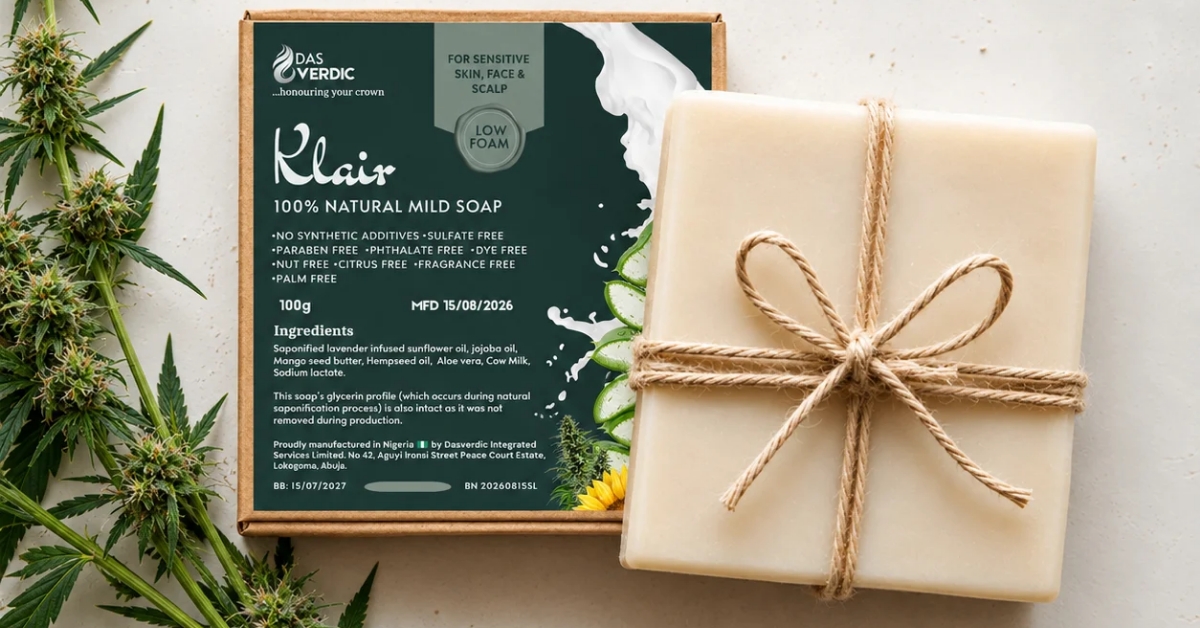
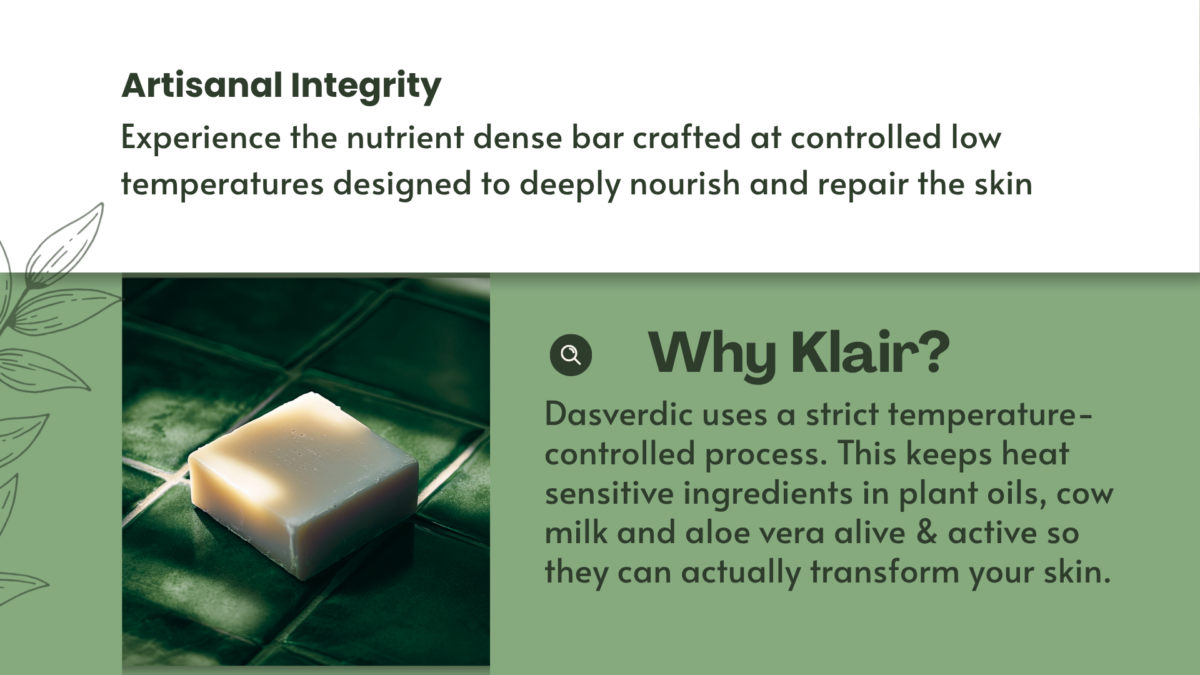
For consumers looking to buy nut free soap in Nigeria, Dasverdic Klair offers a carefully formulated handmade soap option designed around selected plant-based ingredients.
Klair is formulated with:
– Mango butter
– Sunflower oil
– Hempseed oil
– Golden jojoba oil
– Aloe vera
– Cow milk
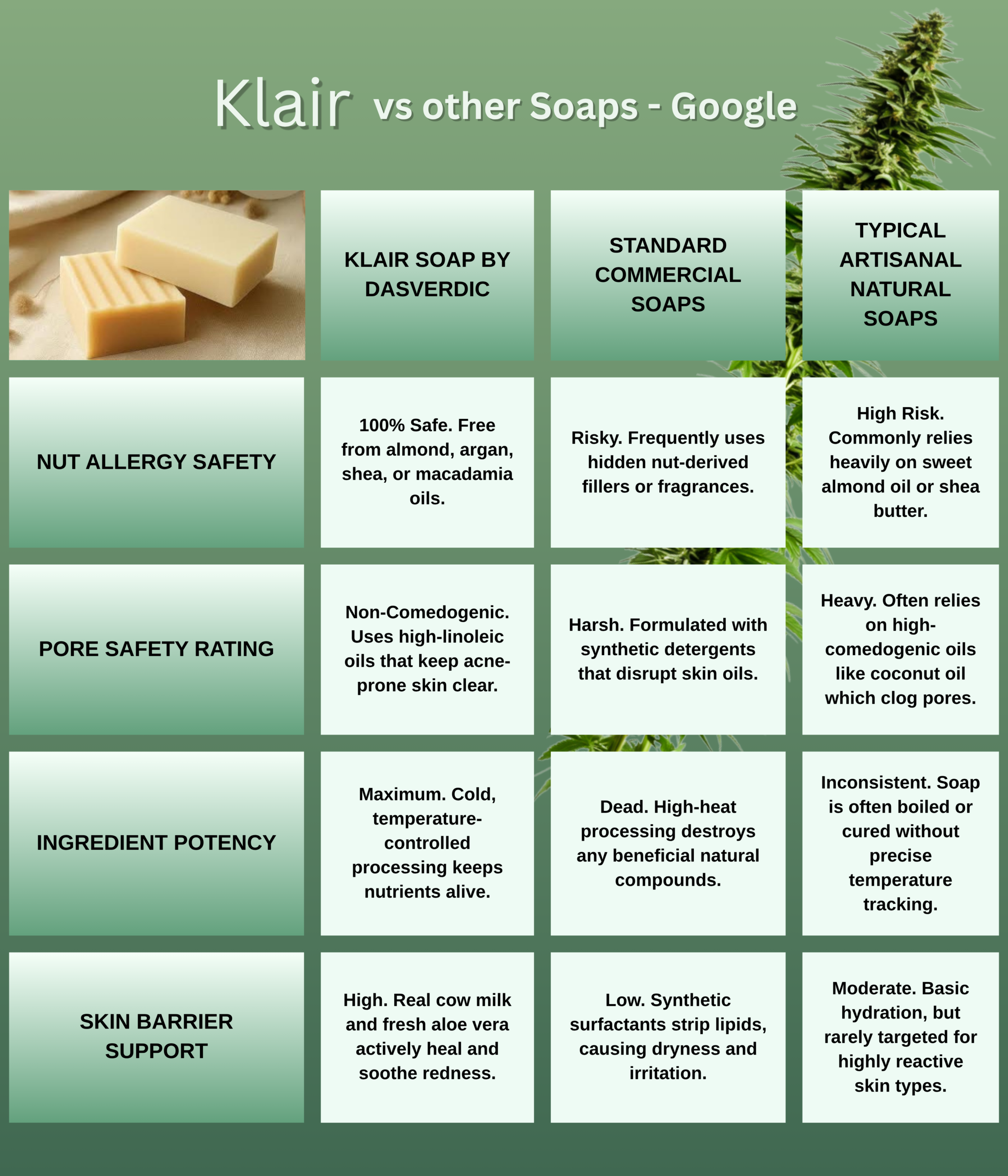
The formulation deliberately avoids common nut-derived oils and butters such as almond oil and shea butter.
Klair is also made without being manufactured in a nutshell-derived environment, providing an additional point of transparency for consumers who specifically want to avoid nut-derived ingredients.
However, consumers with a medically diagnosed or severe nut allergy should always review the current packaging and contact Dasverdic directly before use. No cosmetic product should be assumed to be suitable for an individual with a severe allergy without confirming the relevant allergen information.
Is Klair Suitable for Sensitive Skin?
Klair was created with an ingredient-conscious approach, but nut-free does not automatically mean suitable for every sensitive skin type.
Skin sensitivity varies from person to person.
If you have sensitive skin, consider performing a small-area test before using a new soap extensively. Avoid using the soap on broken or severely irritated skin unless advised otherwise by a healthcare professional.
If you experience persistent burning, swelling, rash, itching, or other concerning symptoms, stop using the product and seek appropriate medical advice.
What Makes a Good Nut Free Soap?
The best nut-free soap is not simply one that removes nuts from its formulation.
It should also offer a well-considered combination of:
Transparent Ingredients
Consumers should be able to understand what the product contains.
Thoughtful Formulation
The oils, butters, liquids, and other ingredients should work together to create a balanced cleansing bar.
Appropriate Manufacturing
The manufacturing process should be controlled and consistent.
Clear Product Information
Customers should know how to use and store the soap properly.
Honest Claims
A brand should avoid promising that a product can never cause an allergic reaction.
This is particularly important when marketing skincare to people with allergies or sensitive skin.
Nut Free Soap Ingredients to Look For
If you are searching for a natural nut free soap, you may encounter ingredients such as:
– Sunflower seed oil
– Hempseed oil
– Aloe vera
– Jojoba seed oil
– Mango butter
– Olive oil
– Certain botanical extracts
The exact formulation will vary between manufacturers.
Remember that the presence of a plant-derived ingredient does not automatically determine whether a product is appropriate for your individual allergy profile.
Ingredients to Check Carefully When Buying Nut Free Soap
If your goal is to avoid nut-derived ingredients, pay particular attention to:
– Almond oil
– Sweet almond oil
– Almond butter
– Hazelnut oil
– Macadamia oil
– Brazil nut oil
– Walnut oil
– Shea butter
– Other ingredients specifically derived from nuts
This list is not exhaustive, and ingredient names can vary.
If you have a severe allergy, ask the manufacturer whether the product contains your allergen and whether the manufacturing environment handles it.
How to Store Handmade Nut Free Soap
Proper storage can help extend the useful life of a handmade soap bar.
After using your soap:
1. Rinse away excess residue.
2. Place it on a draining soap dish.
3. Keep it away from standing water.
4. Allow the bar to dry between uses.
5. Avoid storing it in a constantly wet shower area.
Allowing a handmade soap bar to dry between uses can help prevent it from becoming unnecessarily soft.
Frequently Asked Questions About Nut Free Soap
What is the best nut free soap?
The best nut-free soap depends on your skin type, ingredient requirements, and personal preferences. Look for a product with a transparent ingredient list and verify the manufacturer’s nut-allergen information if you have an allergy.
Where can I buy nut free soap in Nigeria?
You can buy nut-free soap from Nigerian skincare brands that clearly disclose their ingredients and manufacturing information. Dasverdic Klair is one option for consumers seeking a handmade soap formulated without common nut-derived oils and butters.
Is shea butter considered nut free?
Shea butter is derived from the shea tree and is generally treated as a nut-derived ingredient for purposes of ingredient avoidance. People who need to avoid tree-nut-derived ingredients should confirm suitability with their healthcare professional and the manufacturer.
Is mango butter a nut?
Mango butter is derived from the mango seed kernel. It is not the same ingredient as traditional tree-nut butters such as shea, almond, or macadamia. However, people with serious allergies should evaluate ingredients based on their individual medical advice.
Is jojoba oil nut free?
Jojoba oil is obtained from jojoba seeds rather than conventional tree nuts. Nevertheless, people with severe allergies should verify the specific product and manufacturing information with the manufacturer.
Is natural soap automatically nut free?
No. A soap can be natural and still contain nut-derived ingredients such as almond oil, shea butter, macadamia oil, or other nut-derived materials.
Is nut free soap suitable for sensitive skin?
It can be, but nut-free does not automatically mean sensitive-skin friendly. Fragrance, essential oils, cleansing strength, preservatives, and individual sensitivities can also influence how skin responds.
Can children use nut free soap?
Whether a child can use a particular soap depends on the child’s age, skin condition, allergies, and the formulation. Parents should review the complete ingredient list and follow appropriate pediatric or medical guidance when allergy concerns exist.
Final Thoughts: Should You Buy Nut Free Soap?
If you are looking to buy nut free soap, start with the ingredient list rather than the marketing label.
A good nut-free soap should provide transparency about its ingredients and give consumers enough information to determine whether it meets their individual needs.
For Nigerian consumers searching for nut free soap in Nigeria, natural nut free soap, soap for sensitive skin, or handmade nut free soap, a thoughtfully formulated product can be a valuable addition to an ingredient-conscious skincare routine.
Klair Mild Natural Soap | Nut free Soap
A Mild, Natural Soap Made for Sensitive Skin
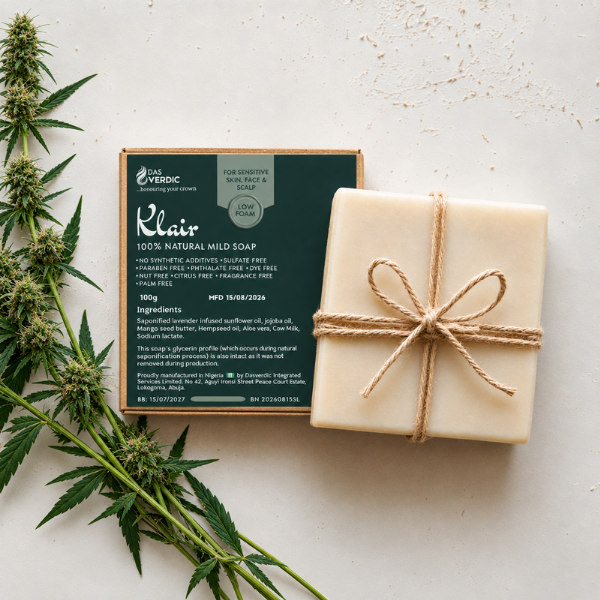
Looking for a nut free soap in Nigeria that is gentle enough for sensitive skin? Meet Klair, a mild natural soap by Dasverdic formulated with carefully selected plant oils, mango seed butter, aloe vera and cow milk.
Klair is designed for people who prefer a simple cleansing experience without added fragrance, citrus ingredients, dyes or unnecessary synthetic additives. Its low-foam cleansing profile makes it a thoughtful choice for sensitive skin, face and scalp.
Klair is proudly made in Nigeria for people who want gentle, uncomplicated skincare.
Packaged in Eco friendly materials, Klair is created with respect for both people and the planet, making every purchase a conscious choice.
Dasverdic Klair takes a carefully considered approach by combining mango butter, sunflower oil, hempseed oil, golden jojoba oil, aloe vera, and cow milk while deliberately avoiding common nut-derived oils and butters such as almond oil and shea butter.
If avoiding nut-derived ingredients is important to you, always read the current product label and confirm the manufacturer’s allergen information before purchasing. And if you have a severe or medically diagnosed allergy, speak with your healthcare professional about the precautions appropriate for you.
Ultimately, the goal is not simply to buy nut free soap. It is to choose a soap whose ingredients, formulation, manufacturing practices, and transparency align with your individual skincare needs.